
(AKA why I don’t love freeform roleplay). This is just a short thought from some conversations I was having earlier, so it isn’t all that fleshed out:
I like OSR (‘Old School Renaissance’) games. One of the main tenants of OSR games is ‘rulings over rules’ and there’s a focus on the GM as an impartial arbiter of decisions: while there are some rules, what is more important is focusing on good, consistent adjudicating based on player-skill.
However, rulings over rules could be a bit of a problem when it comes to dealing with people who ‘powergame’ (eugh, terminology nonsense again), defined here as folks whose primary source of fun is making the most powerful character as possible. Sometimes, these powergamers push rules, however – twisting things with vague wording or missing notes on contraindications to fuel their power fantasy. People pushing systems really sets off warning bells for me because it tells me up-front the kind of game they wanna play (very gamey), which is not the kind of game I want to play. It’s okay if some people like that, but it is not for me, and as a GM who operates under very rulings and logic/fairness rather than actual rules those players really wouldn’t work well at my table. They’ll just thrash about at rules that aren’t there… with no true constraints they feel like they can do anything, and the only thing stopping them is me, as the GM, and things start to look adversarial.
To this end, I find rules can be good tools, because they contain certain types of friction to in-game only: if someone wants to do x, the rules are telling them how far they can go, rather than me telling them how. If they have a problem, they can dislike the rules, but if it’s rulings, that dislike turns to disliking me, and my adjudications instead. This is why I don’t like totally rules-less systems: I don’t like having everything on me. I want some sort of barrier between my feelings and the players’ feelings in the form of game mechanics to reduce friction. I like something that tempers my own biases I bring to the table. Game mechanics end up being a neutral space – while most friction can be ironed out with communication, having something unbiased and in some form of rigidity is good for creativity as well as avoiding needing to deal with a lot of confrontation and heavier communication.
Part of why I like Numenera so much is because it directly addresses that in the corebook: “if a player has a problem with the rules not saying they can’t do something and asks you to show them where they’re wrong, point them here: they’re wrong” (paraphrased from memory, a little). It allowed flexibility while also providing a written constraint and advocated for me as the GM and my decisions. I always had a +1 to my justification, so to speak (though this didn’t help in tempering my own biases – there were other rules for that).
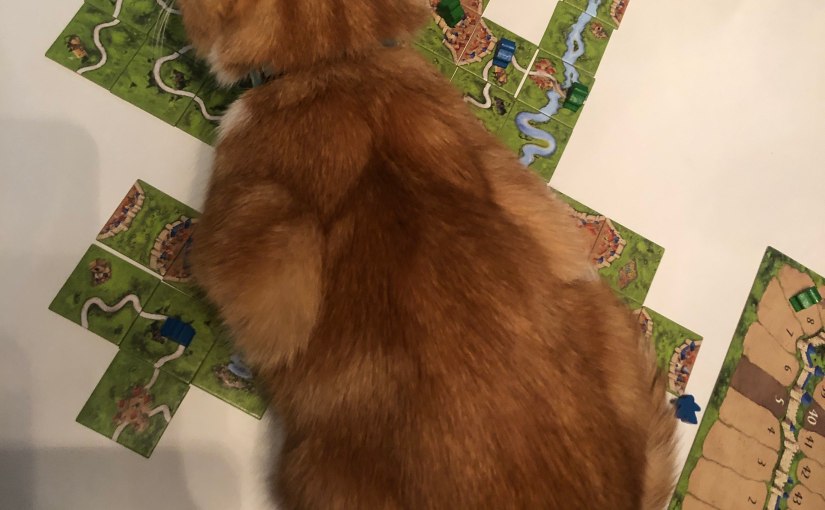
Of course, having someone butting heads over rules, rulings, and just generally shitting (or in my cat’s case – sitting) all over the game table is a whole other issue in general (and I just don’t play with those people to begin with), but this is useful food for thought and examining why I like having some rules if I ever get into a situation where I misjudged someone, am invited to a game or running at a convention where I don’t get to pick the other players, or if one-off miscommunication issues on rulings ever cropped up.
 Slice of Beef
You should do one where you go into the differences of OSR vs like 5e and maybe through in something like PbtA or something.
LikeLike
the OSR Primers (Matthew Finch wrote the famous one) sort of go through the differences between ‘modern’-style GMing (used in 5e) and OSR. There’s actually a whole OSR blog network I’m a bit too tangential to be a part of where they go into a lot of neat stuff!
LikeLike