On Improving Game Mastery

“IS WHAT I’M MAKING EVEN GOOD?” I ask myself,

“WHERE CAN I GET UNBIASED FEEDBACK?” I continue,

“HOW DO I GET BETTER?” I finish.

Dungeons. Dungeons, dungeons, dungeons. I can read dozens of articles on dungeon design. I can take courses, and watch videos. I can look at what I think are good dungeons, and I can tell when something is a bad dungeon… but how do I know if my work, my dungeons, are actually. getting better? Why even make dungeons at all? Why dungeons?

The first part of the answer is “make more dungeons” (and compare the old ones to the new ones), but I only manage to make a couple per year, and they’re not always that thoughtful. I barely even have experience being inside dungeons as a player! I’m a baby! I’ve only played TTRPGs since late 2017, and I’ve only been running them for the last two years… I feel like I’m in a metaphysical crisis, a philosophical despair about the dungeon here.

But dungeons are just an example vehicle for general discussion here – all this is a result of my trying to put one together over the last week. The real point is, I feel like I’m spinning my wheels about game mastery and game design these days. I could run sessions 5 times a week, or write up a dozen scenario hooks, and it would probably lead to some improvement, but it’s not directed practice – my energy isn’t primarily being spent on being a better game master. Rather, I’m just going through the motions. Instead of practicing the metaphorical guitar, I’m just strumming the strings for twenty minutes – it all feels so aimless. What do I need to do, how do I focus on something specific to improve upon? How can I best bridge that gap between theory and praxis?

Even theory is tough – I used to feel quite smart during my university days. I was truly picking up knowledge and figuring out how to apply it… but lately, I can read through game design books and it’s like “what am I even picking up, here?” or “how do I actually study this?”! I’ve nearly forgotten decades of school and how to learn things! Applying it is worse – how do I know when I’ve succeeded? “Your players had fun” is an extremely low bar for me (a good one to strive for with the casual games master, but not really what I’m talking about here). I’m aiming for the intentional application of good gaming. Some sessions will just not work out – they won’t be fun. But that’s never necessarily the game master’s fault alone – it’s a myriad of factors. What I want is to figure out how to parse out those factors – and know that even if things weren’t fun, what did I do right anyway?

It isn’t exactly a self-confidence thing – I think my Cult in the Empire of Decadence was a good module. I even think the Fools’ Day dungeon I’m working on is going to be up to a decent standard. I’m still happy to run things and post my work online (when I manage the time to do the work anyway). But as a “professional” game designer (one that’s making a profit) I don’t want to put out work that’s not worth the price. I probably spent a few hundred dollars on making Cult and maybe 60-80 hours of work on it – how much is my time worth? A lot! I need to pay myself a living wage, after all. It’s not fair to pay myself less. But also – how can you expect consumers to buy something awful? I tried to price Cult fairly – it’s a good piece of work, and I’m proud of it. But I don’t want to be Wizards of the Coast charging $80 for a slim hot mess of a module that needs major re-working, that you then have to pay another $40 extra to get the digital edition of. There are fair wages, and then there’s… that.

That said, maybe the bar for good design is lower than I think it is…

On Time

Speaking of my missed session last week, and combined with some other things I have been thinking about, I would like to talk about time. Session pacing, session scheduling, spot-light sharing, in-game calendars: the works. This is sort of my typical ‘patchwork’ style of writing, so it’s a little about a lot of things without any depth. Maybe I’ll move on to writing more interesting, complex, specific articles someday? Probably not. Enjoy this for what it is, instead:

First up, session pacing. I’ve heard, on multiple occasions, that I am a “god of well-paced sessions, I wish I could run games like you”, as well as simultaneously someone who said I “could use a lot of work, it feels like the characters don’t accomplish anything”. These comments come from multiple different players from different backgrounds, all in the same month-ish timespan. So, am I good at pacing or not? The answer, unsurprisingly, comes down to it depends on the table. Both yes and no. Nobody wants to hear this, but I genuinely don’t think there’s a science to it. Maybe an ‘art’ – people have tried, bloggers have written dozens of articles about it, and while there are definitely plenty of tips that you can (and should) follow, like “bring a man with a gun through the door” when things get slow, or alternating high-intensity situations with lower-intensity downtime scenarios, and these things will help you improve your ability to control pacing… your mileage will inevitably vary, no matter what you do. I feel like even if I mastered and put all these skills to work as intended by the authors and game designers, someone, somewhere, is going to play with me and tell me it sucks anyway. Someone will also tell me I am incredible. Perhaps even two people at the same table. Maybe even the same player. My best advice, for learning how to pace sessions, then, is to set up a situation where your table has the level of trust in place that the GM is able to ask for and receive genuine feedback, where they can start tailoring to the specific group and find out what works. This is the actual trick to pacing – whatever’s fun, let the fun parts happen. Get rid of the stuff your group finds boring. Even if the fun stuff isn’t full of meaningful choices, it’s okay to still have all your shopping trips play out if the table finds it fun. Earlier this week, in session four of my Stars Without Number campaign, I spent probably far more time on the dance competition than was necessary, and I could have resolved it in a single roll…. but it was fun!

Certainly, if you were re-publishing the game as it happened into a book, perhaps you would cut out a lot of that content to make it more fun for the readers. Or perhaps if you ran a stream for a live audience, you want to keep things exciting for the majority (that’s a whole different can of worms). But in our case, the only ‘readers’ that need to enjoy the game are the people at your table. After that – you can always consult the advice blogs for your specific situation, but on their own, in a vacuum, it won’t work. That’s the trouble with GMing, there are almost no wrong ways to do it. I’ve had a lot of personal struggles with doing lot of GM theory-crafting and then when I put it to the table it turns into a mess. That’s a whole other subject, but yeah. Relax. My advice is to just run the game how you think feels best in play, if you find yourself spending too much time on one thing and not enough on another, check in with your players, and then try using different skills to speed it up or to slow it down. You’re always relearning everything with every new table you put together.

Putting those tables together is a whole different beast, though. You’ve heard it countless times: the greatest enemy in tabletop games is real-life scheduling. Players get married and need to take a month off for the wedding, suddenly have kids and need to work around their bed times, call in sick and can’t make it one week, or even end up leaving the table permanently for all kinds of reasons. I’ve had my heart broken several times over by a Numenera game last year that just didn’t work out – people weren’t communicating, we had different ideas on how often to play – things had changed over the past three years. I was left frustrated and upset and I don’t think there’s anything that I could have done to make it better.

Honestly, the best thing I can say here is to state your commitments, find people who are open and honest about their scheduling, communicate often, keep the overall game relatively short (i.e. only 10 weeks versus expected three years), and run regardless of attendance (one on one sessions can still be fun!). Or run an Open Table for as long as you feel like it. There’s not much to say, except it’s frustrating. The long-term things, the multi-year epics… those only complete with luck, a lot of player turnover, or a lot of money. With a lot of vetting practices (maybe I’ll do another post on how I acquire players) and good communication abilities, you absolutely can get a group that plays together and stays together, though, so don’t give up!

All these different players you do manage to get into the same timeslot, though, have other problems: Returning to the ‘fun’ talk, what happens when one player loves shopping trips and another finds it incredibly boring? The easy answer is ‘play with people who all find the same things fun’ and there’s no problem, and there are definitely some aspects of gaming that you cannot compromise on, but the likelihood of actually finding people who all love the exact same things and can bring enough fresh perspective to make the narrative interesting is probably somewhere in the 0.000000000001% range. As much as I love telling people to kick truly uncooperative players, and screaming bankuei’s everlasting great advice that you should be meeting at the game, there are always going to be situations where you have to acquiesce to the other person’s wants. So, the solution is ‘sharing the spotlight’. Make sure, at the end of the day, that most people are having fun, and get as much of a share of the ‘spotlight’ on their fun parts as they want.

Notice how I didn’t say ‘equal’ share. I could almost post an image of that ‘standing-on-boxes’ equity picture; I won’t but it’s the same idea – make sure everybody is having fun the way they want. Usually, it’s that you need to make sure everyone, including the GM, has roughly the same amount of speaking time – however, there are exceptions, such as one of my SWN players who deeply prefers to ‘spectate’ and only have small portions of personal roleplay per session. I have talked to him about this on multiple occasions; talked to that table about this, and everybody is on board with the situation of him mostly listening and putting forward his opinion when it matters. It’s all down to your table and what works for everyone, and listening to your players and adjusting as you go.

I left a game of Burning Wheel recently for this exact issue: it wasn’t the Game Master’s fault, per se (though I think I would have appreciated a more compromising response to my feedback), but it definitely wasn’t the right fit for me. We typically spent multiple hours of session time on a single player, with the expectation that ‘eventually everyone will get a solo session’ of sorts. This didn’t sit right for me, not because it’s terrible game mastery, but because it wasn’t what I found fun. I didn’t want to essentially spectate on a podcast for three hours, and I also didn’t want to ever end up in the situation where I had to narrate my own PC for two hours straight. Perish the thought. I don’t like being the main character, and though I absolutely want good sections of focus – I require a balance, and that table just didn’t have that. I spoke about it and the GM’s decision was final – this is how we’re running it. Back to bankuei – they decided to play a specific “game – for this specific rpg, this specific campaign you’ll be playing, and this particular group of people” and either the expectations earlier had some crossed wires, or I agreed to it and decided it wasn’t what I wanted. I’m not sure, but they’re having fun, and that’s what matters.

So, however you finangle your spotlight to your group, the point is keeping an eye on the clock and making sure you’re actually meeting the expectations of everyone. This shouldn’t be just the GM’s job, but the majority of the responsibility does fall on them to keep an eye on things, and it can be very easy to lose track of time if you get caught up in something the GM personally finds fun (see: my dance competition – I made sure to do a scene swap midway through to give the other players something to do that wasn’t just playing a dance minigame). However this works for you – whether that’s setting actual timers, or just making sure you have a very visible clock in your direct view, doesn’t matter, but you do need to be mindful. That’s far more important than overall pacing – making sure everyone is getting their fair share of what they want out of the game.

On a final note, despite me personally being fine with what happened in my Burning Wheel situation, I do want to point out that generally this really should be a ‘per session’ or ‘per two sessions’ basis. No one should be left out of a game’s fun for an entire session – if such a situation were to need to occur, just run a solo session or smaller group for the players it matters for and maybe give players a short summary to read. Offer them the choice to listen in or not. As mentioned when complaining about scheduling – we only have so much time in our lives. We want to spend it on things that matter, and every three to four hours of gameplay should be fun for the entire table. That is, if a particular player hates combat, it’s okay to have an hour of combat they slog through – but if the whole session is going to be four hours of combat, maybe telling that player to skip that week is better than having them there and suffering. Or, you know, don’t make sessions that are going to be four hours of combat if you know one person hates it.

Time in games is wiggly. For every real-life week, an hour could pass in the game world. Or It could be four months of content (see pacing, earlier). I actually had this article in my drafts when Adventure Forecasts by PCD was published (great article, go read it) and felt I should also add in a note about it, so here it is (if a bit awkwardly placed, it still fits the theme of the post). I’m not a very talented OSR blogger in particular, so I don’t think I have many important personal opinions to say, but here are my opinions on the above:

A living game world is a lot of work. A game where everything you do is realistic and makes sense is a lot of work. Even just writing a calendar of events is a lot of work. I can barely put my own life’s calendar together. The dream of pre-planning all these potential events is something I both want to strive towards, think this article is 100% right in recommending, and something I know is ridiculous for the average layman GM try to achieve. Maybe a professional who only goes GMing as a full-time gig could have the time and resources to spend on it. I think using the technique of having pre-scheduled, missable events in smaller doses throughout the campaign to add verisimilitude, while also keeping ‘static’ events that happen whenever the players interact with them, is a good mix that will keep your mind sane. A GM’s time in real life is just as important as time in the game itself. Don’t go burning yourself out writing potential hooks for every non-player character’s birthday in the game, or countless planet’s worth of holidays. Only do this if you genuinely have fun writing such things.

Time is the only thing we can’t get back in our lives. Spend it on things that create fun.


Game Mechanics as a Neutral Space

(AKA why I don’t love freeform roleplay). This is just a short thought from some conversations I was having earlier, so it isn’t all that fleshed out:

I like OSR (‘Old School Renaissance’) games. One of the main tenants of OSR games is ‘rulings over rules’ and there’s a focus on the GM as an impartial arbiter of decisions: while there are some rules, what is more important is focusing on good, consistent adjudicating based on player-skill.

However, rulings over rules could be a bit of a problem when it comes to dealing with people who ‘powergame’ (eugh, terminology nonsense again), defined here as folks whose primary source of fun is making the most powerful character as possible. Sometimes, these powergamers push rules, however – twisting things with vague wording or missing notes on contraindications to fuel their power fantasy. People pushing systems really sets off warning bells for me because it tells me up-front the kind of game they wanna play (very gamey), which is not the kind of game I want to play. It’s okay if some people like that, but it is not for me, and as a GM who operates under very rulings and logic/fairness rather than actual rules those players really wouldn’t work well at my table. They’ll just thrash about at rules that aren’t there… with no true constraints they feel like they can do anything, and the only thing stopping them is me, as the GM, and things start to look adversarial.

To this end, I find rules can be good tools, because they contain certain types of friction to in-game only: if someone wants to do x, the rules are telling them how far they can go, rather than me telling them how. If they have a problem, they can dislike the rules, but if it’s rulings, that dislike turns to disliking me, and my adjudications instead. This is why I don’t like totally rules-less systems: I don’t like having everything on me. I want some sort of barrier between my feelings and the players’ feelings in the form of game mechanics to reduce friction. I like something that tempers my own biases I bring to the table. Game mechanics end up being a neutral space – while most friction can be ironed out with communication, having something unbiased and in some form of rigidity is good for creativity as well as avoiding needing to deal with a lot of confrontation and heavier communication.

Part of why I like Numenera so much is because it directly addresses that in the corebook: “if a player has a problem with the rules not saying they can’t do something and asks you to show them where they’re wrong, point them here: they’re wrong” (paraphrased from memory, a little). It allowed flexibility while also providing a written constraint and advocated for me as the GM and my decisions. I always had a +1 to my justification, so to speak (though this didn’t help in tempering my own biases – there were other rules for that).

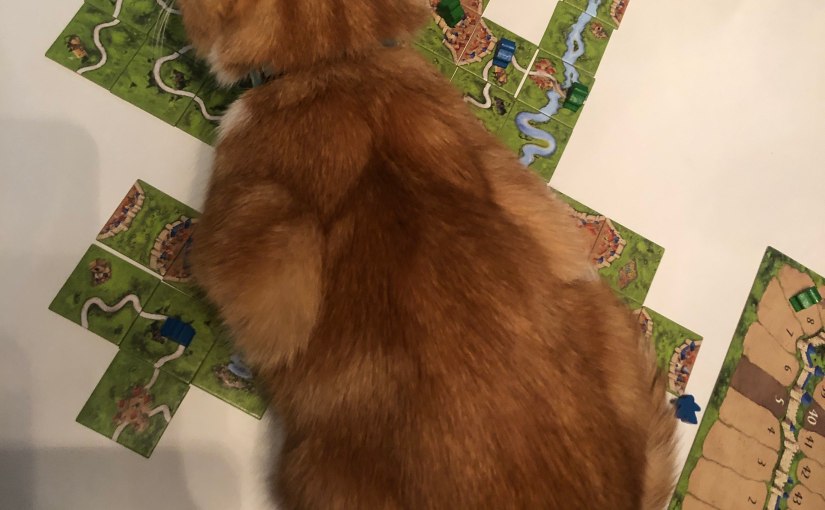
Of course, having someone butting heads over rules, rulings, and just generally shitting (or in my cat’s case – sitting) all over the game table is a whole other issue in general (and I just don’t play with those people to begin with), but this is useful food for thought and examining why I like having some rules if I ever get into a situation where I misjudged someone, am invited to a game or running at a convention where I don’t get to pick the other players, or if one-off miscommunication issues on rulings ever cropped up.

Define Your Terms

After having been involved more deeply in the hobby over the last year, I’ve been exposed to a lot of different ideas. From blogs like The Alexandrian to The Angry GM, or big companies like Monte Cook Games, there are a lot of game masters in the hobby that put their ideas out on the internet on how to run your best games. I’d like to collate some of their ideas, as well as what I’ve personally been exposed to in the hobby, into what I think I’ve realised is the most important thing about tabletop: healthy and honest communication. You need to spend a lot of time talking to each other.

“But Beef, my friends would rather play the game with me than waste time talking about things! We barely have any time to play!”

Well, surprise: you can’t play the game without talking about things. People might disagree with me on this, but those are always the same people who come to me with ‘problem players’ that are ruining their fun.  You aren’t wasting time by talking about things, you’re setting up the fun – just as how you would be far less frustrated by first reading the instruction manual before building a particularly complicated bit of IKEA furniture.

That said, it is a fair point that one does not want to spend hours of their dedicated playtime talking about things (especially if you are rather limited by other priorities). What we want to do, then, is simplify the process of communication so it can be done quickly and effectively and ensure everyone is on the same page without having eight hours of conversation for one hour of actual play.

—–

Bankuei talks about misconceptions in ‘the roots of the big problem’, the focus of the post was how a lot of game rules, in D&D particularly, aren’t written, and how everyone is playing a different game under the same name. And, in the follow up ‘a way out’ article, Bankuei discusses how getting onto the same page in what game we’re playing is how you solve that issue. I’d recommend reading them for a bit more context so that I won’t repeat things that aren’t my words here. However… while these issues are part of the communication problem, I am surprised that this article wasn’t taken any further – into specific terminology and definitions used in tabletop roleplaying games.

Players always seem to not know what they want in games – if you ask them outright, you either get a vague idea like ‘lots of roleplay’, or specific examples of situations and then we go and include those things in our games as game masters and find those same players just aren’t enjoying it. I’d argue that while part of it is just limited experience (maybe they thought they wanted to roleplay, but actually didn’t like it when they experienced it), or unintentional emotional dishonesty as discussed in Bankuei’s article here, the problem may actually just be us perceiving them not knowing what they want because they don’t use definitions, they used terminology, and the people involved in the conversation are using different definitions for the same terminology. For instance, I used ‘lots of roleplay’ as an example, but what does ‘roleplay’ even mean? Playing a character, maybe? But how do you play that character?

You see this across experienced GMs as well. Bankuei uses terminology instead of definitions throughout their articles and defines ‘narrativsm’ in a way that implies that the characters of the game are the focus, but if you look at a lot of ‘narrative-driven’ bloggers, you find that those are more often than not focused on a central plot thread and story put forward by the GM (characters making choices in it is important, but the characters’ stories still aren’t the focus as compared to the ‘main’ story). Matthew Colville talks about different kinds of players (and the problems with categorising them), but if you compare that to the Angry GM’s ‘different types of fun’ based on this psychology article, from which he changed the definitions of the terms to suit his needs, things start to get confusing because the categories begin to not only overlap, but they also contradict each other. Not only that, but Angry is clearly fixated on defining in more detail the type of fun he particularly enjoys (which is expected, and not a bad thing), and the other definitions end up lacking a lot of verisimilitudes. You can take all these terms and categories in isolation and they work, and the definitions are included, but as soon as you start talking to someone who has seen Colville’s video but has not read Angry GM’s article, and you have read the article but not seen the video, you start to run into problems where you think you are talking about the same things but you’re not. And this becomes a problem in communication where you start to debate definitions.

A few weeks ago, I had a conversation with a colleague about RAW (‘rules as written’) and RAI (‘rules as intended’) in games. They argued that RAW is not necessarily about reading it literally but thinking about the intended meaning based on an understanding of common terminology. RAI was more about ‘abstract’ intentions for rules for fairness, rather than actual interpretations of words. For example, in D&D 5e, the feat “crossbow expert” is often applied to any ranged weapon RAW,  because it doesn’t say “with a crossbow” on that point. However, the name of the feats is ‘crossbow expert’, which implies RAW, the mechanics are built for use with a crossbow, and not all ranged weapons, even though it does not explicitly state “with a crossbow” in the description of the feat. They went on to say that “RAW doesn’t mean only take what’s only explicitly written nor does it mean to try to dissect things as if you’re a college writing professor”.  Other GMs, however, would argue that being pedantic about RAW is the point – that crossbow expert not including crossbow means that ‘as written’ you are free to apply it to any ranged weapon. So, who is correct? How do we read RAW or RAI? Are Rules as Intended actually about abstract intention or anything beyond pedantic literal readings?

It doesn’t fucking matter.

Dealing with absolutes is meaningless. That whole paragraph was a waste! Debating definitions not only takes up a lot of time, but it also takes away from the point of the conversation. People generally don’t want to be corrected on things, even if they’re wrong, and being right starts to become the focus of the conversation instead of solving the problem initially posed. Should we be debating what RAW/RAI means, or should the GM just decide how we’re going to rule the feat in play going forward and tell people that? Does it really matter who has the ‘correct’ definition of ‘roleplay’, or does it matter that you want to find out if you and another player want the same things out of the game? The problems never get solved and people decide that they don’t want to waste time talking about them. 

Solution: Speak in definitions, not terminology.

Language is contextual and situational. Especially English, which I’m writing in now (where homophones and homonyms abound)! By getting rid of terminology altogether, you stop making assumptions about something based on what might not be true for the other person, and start hearing what they mean and want when they hear those terms. Instead of asking someone ‘do you prefer roleplay or combat more?’ ask them ‘how do you use your character sheet in a game? What are the important parts of it for you?’ to get a better idea of where they’re coming from. Generally, when recruiting players for my games, I’ve turned away from those ‘What do you want out of a game?’ or ‘Do you prefer exploration, roleplay, or combat’ sort of political meme chart questions. It is a lot more work for me, but I find that interviewing people one on one once I get their applications and having a conversation about what they’ve enjoyed in games or hearing about their characters tells me far more and is a lot more accurate than me polling them to put their feelings into categories. Not only that, but opening this dialogue up from the beginning allows me to build much better camaraderie with people I hope to be playing with, and sets the stage for future open communication.

I could write a lot about what you do once you have figured out what people want, and we can loop into Bankuei’s point about folks not being able to force anyone to want the same things, but I think that’s best saved for another post altogether (and probably done enough by other GMs who have said it better than I). The point is, however, that using descriptive language instead of terminology is going to save you a lot of time when telling people what you want and them understanding what you want.

—————–

Addendum: All said and done, some people might still want to use terminology. To that end, I am creating a handy dandy dictionary of common tabletop terms and the most common definitions I’ve seen across various communities. You might define these terms differently (see the entire article above, and I welcome feedback or clarification or additional terms)… but perhaps this might be a useful ‘come together’ standardisation point when discussing tabletops in the future (I’ll post the link here eventually and continue adding to it as I go). This is also a fairly incomplete thought, I feel, so I’ll probably write more about it later.