99 Problems But A Backstory Ain’t One

There are two complaints I hear often in my GMing circles:

My players refuse to send me any backstory, how do I get them to be more invested?!”

vs.

“Gods, my player wrote me 32 pages of backstory, what is the point of that, the story hasn’t even happened yet, I’m not reading that!! They’re level 1!!

Okay, so, I have a lot to say on both of these comments, and as usual, this is probably just nonsense rambling, but I loathe people who say both of these sentences. You’re looking for a unicorn-specific level of investment from players and that’s ridiculous.

First of all, let me say up-front that I am excluding talking about people who suffer from extreme protagonist syndrome and make the game un-fun for other people at the table. Those people are a problem no matter how long of a backstory they write, and they aren’t who I’m talking about today. I’m talking about at least half-decent players and the differences in their level of investment and creative freedoms.

So, let’s talk about the first sentence because it’s pretty straightforward – the problem of players not being invested enough to give the GM any sort of information on who their character is. On the one hand, some people like to get a feel for their characters in play before they start really thinking about them. I get that – Tolfos, my first PC I ran with for over three years, didn’t have any backstory until about a year in. Mostly, I wasn’t sure what I was doing or that I even needed it. But in that case, I still wrote a backstory – it just came later! While I’m personally not a fan of players who do that method, I think it’s perfectly valid. There are also some games (especially stuff like MÖRK BORG) by their very nature don’t really need backstories (because your characters will probably die 30 times a session, and there’s hardly any time or reason to write more than a sentence.). So we have some pretty valid reasons why it’s okay to not write a backstory immediately. That does leave the problem of players who never write any backstory though – the ones who just don’t care to write one.

As bankuei writes on trying to make people do things: “‘How do I make them want what I want? How do I change who they are?’ There’s no answer to that. It’s an unsolvable problem”. If someone doesn’t want to write a backstory it’s because they don’t want to write one. If you want to play with people who write backstories, then you have to find people who like writing backstories. The kinds of stories I want to explore require players who want to write backstories, and I won’t play with people who don’t, but I still won’t chastise anyone for not being interested in writing one. Put the backstory requirement up-front in your game ad and communicate your needs.

So, you’ve found people who want to write backstories, at the minimum length required for your games to run. But, oh no, some of these people are too invested in their backstories! It’s time for the complaints against 32-page writers (I admittedly fall into this category):

First, there’s the matter of strain on the GM. On the one hand, it’s true that as a GM you don’t necessarily have a lot of time, and you already put in a disproportionate amount of work. I can understand not wanting to read [insert however many pages is too long for you] of backstory that your players have written. However, I don’t think this is a good excuse to complain about people who write these lengthy backstories. I think if you don’t have time to read backstories, that is where you tell your players up-front that you just don’t have time to read more than [x] pages and set limits for your table on how much material they can provide you. Set expectations and boundaries – if you let it be a free-for-all and then complain that someone sent you a novel I feel like that isn’t the fault of the person who wrote the novel, it’s another fault in communication.

Alternatively, one could take that disproportionate amount of work you put into the campaign as a GM and realise that for the players who want to put in extra work, or just as much, the only real space they have to exercise that passion is in their character’s backstory. These players care enough about their characters that they have fun putting extra work in. I see that as a very good sign. They’re appreciating your work, aren’t they? Appreciate their work back!

One of the other biggest complaints I see is “this character is only level one – he shouldn’t have any backstory!”. My opinion on that is if you’re a dedicated roleplayer, and your character is an adult, he’s lived a long life already, even if he’s only level one! I just turned 29 on the launch of this blog, and looking back at my life now, well, while I haven’t slain any dragons, I do have a wealth of life experiences I pull from that have shaped who I am today. Those experiences are important in shaping a person. No one exists in a vacuum. I wrote pages upon pages of backstory for a character once (though I didn’t send it all to my GM, it was just for me) and it was all just exploring relationships with others and figuring out his personal values and bonds. On that note, however, there is the problem of people including things like dragon slaying and superheroic feats: there’s a bit of a valid complaint in “he can’t have fought off a dragon! That makes no sense at level one!”. While it’s true that there is a bit of tonal dissonance there and a lack of realism… I think that just comes down to not everyone being particularly good at writing a backstory. But, as that can be fixed with gentle constructive criticism, I don’t think that matters too much either:

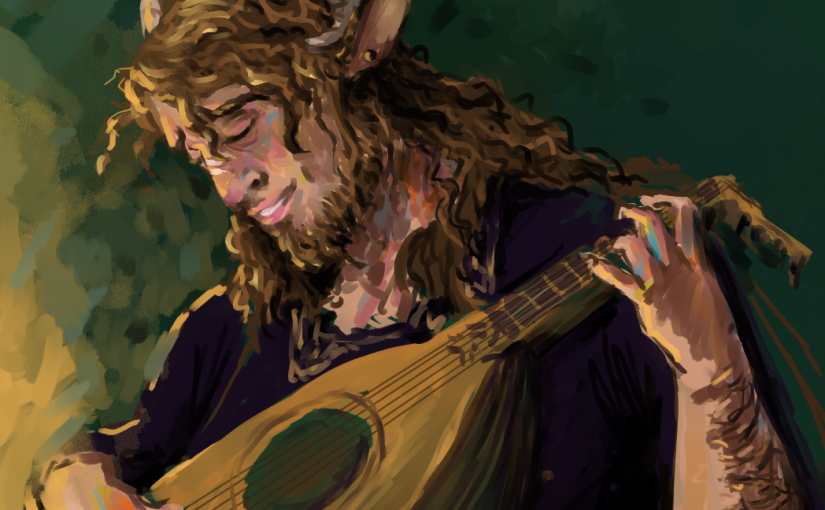
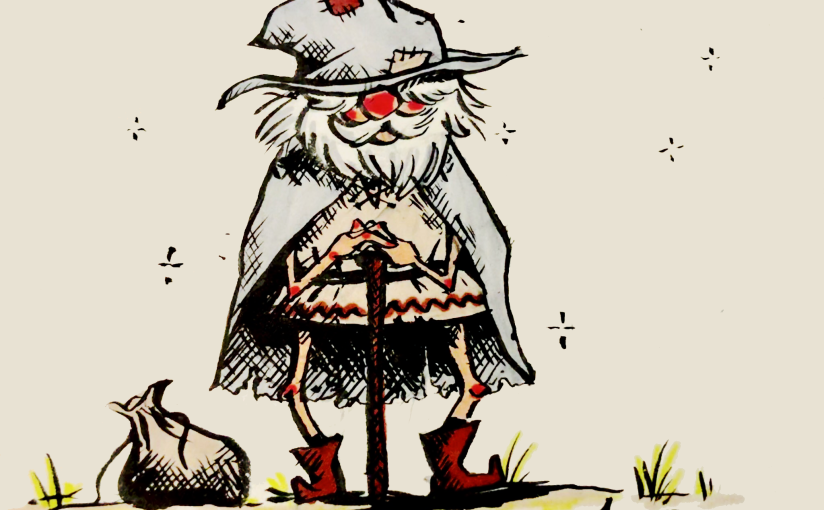
I am an artist – all of the art you see here on my blog posts was done by me (a lot of that is so I don’t have to worry about crediting anyone) and I frequent a lot of art and writing and creative communities. And you know what, some of the people I hang out with are, objectively, not ‘professional’ artists. They’re not very professional writers. But you know why they aren’t? Because they’re new, because they haven’t practised for years, or because they’re like thirteen years old (which is usually inclusive of both the previous two categories)! Do I run around in my online communities and tell these artists that their art is terrible? No, of course not – I fucking look at their art and give them a genuine compliment for the good bits I see and encourage them to keep going, because I love seeing people create stuff and put effort into things and I don’t want to discourage that flame of creativity. They will get better in time. I am a fan of their work.

In that same vein, I am also a fan of my players. I want to be a fan of their characters, too. Writing a good backstory is an art – both in terms of the quality of the writing and the efficiency of it. Honestly? I’d much rather support my players’ excitement in whatever way I can – even if that means reading their terrible unpublished Mary Sue novel.
System Reviews: Ryuutama

I really ought to start this blog strong. But, the post I wrote (released yesterday) seems a bit too heavy and overwhelming for the first blog post, so I figure I should quickly just talk game reviews!

I did not run Ryuutama: Natural Fantasy Roleplay as a GM- it was run by one of my colleagues in my playtesting server so this is my perspective as a player (and having read through the rulebook after the fact). My basic understanding of Ryuutama is it is a travel/exploration-focused Ghilbi-esque TTRPG – sorry “TRPG – Table-Talk Role-Playing Game” with a bizarre amount of lethality and inventory management crush for its cutesy exterior. On to my general thoughts:

+ Worldbuilding together was great, though admittedly I ran a little late and missed a bit of it. Reminded me very much of Microscopelike worldbuilding and I had a lot of fun with that game!

+ I think the emphasis on travel is both a bane and a boon, to be honest – I feel as though travel is the weakest in most tabletop games in terms of mechanics and actually being familiar enough to be able to handle it as a GM. D&D5e doesn’t do travel well. Numenera doesn’t do travel well (though a new book on that is coming in the mail this month for me). A lot of popular tabletops just don’t do travel well (or, rather, it’s not the focus). Unless you’re a hexcrawl master like Justin from The Alexandrian, travel is probably one of the weakest points I’ve seen in other GMs (and in my own GMing). To that end, it was probably a good exercise, but it seemed like it would be tricky to run if you don’t already use a lot of travel elements in your other games. I typically just handwave most travel, and I’d really have to brush up on my skills if it was me running this. I also found it sort of boring. I would really like to see this pulled off by a GM who is experienced in running travel games just to see this system shining at its peak.

+ Unfortunately, during our one shot I was unable to experience the actual combat system, however, my character did nearly die twice anyway. This system is probably OSR-levels of realistically lethal.

+ Inventory management was weird. there’s a lot of encumbrance/weight and carrying capacity nonsense that the simulationist in me found fun, but it seems like a strange amount of crunch when the rest of the game has no crunch at all. I think I spent 80% of character creation organising my inventory, and then I never used any of it during our one-shot (I imagine in a full game it would have more use, but, alas)

+ I liked the condition mechanic (and accompanying roleplay expectations) a lot. Basically, for those unfamiliar, you roll certain stats to determine your ‘condition’ (how healthy/alert you are) for the day. A critical fumble/10+ score has other mechanics in-game, but for roleplay specifically, we were asked by our GM to play our characters according to what we rolled. In the games I run, I usually just ask players straight how they’re feeling that morning but I might incorporate similar things in other games. I will report back on my findings putting this into play elsewhere (fun note: I regularly rolled horribly on condition and enjoyed playing a very elderly frail of mind and might man).

+ Rolling different dice depending on your stats was very fun, and it gave a nice advantage while also still allowing you to do things quite poorly even if you were normally very good at it. I like being able to fail a lot. That said, as I wasn’t running the game I’m not sure how accurate the target # difficulty scaling is.

Personally: would I run this for anyone? No, probably not, it’s outside of my regular wheelhouse and I’m not sure it includes elements I find fun to run as a Game Master (a lot of overhead, travelling as a core mechanic). Would I play it again? Also… probably not? I wouldn’t say no, and it’s not bad, I do love the JRPG elements, and I appreciate some of the simulationist bits… but the setting and tonal dissonance of mechanics vs theme are… mediocre. It’s a perfectly average “TRPG”. I make no offence to those who enjoy the system, I can definitely see its appeal, and I’ll still recommend it to people who like travel and like simulationism, but I’ll mark this one down as ‘not for me’.

Define Your Terms

After having been involved more deeply in the hobby over the last year, I’ve been exposed to a lot of different ideas. From blogs like The Alexandrian to The Angry GM, or big companies like Monte Cook Games, there are a lot of game masters in the hobby that put their ideas out on the internet on how to run your best games. I’d like to collate some of their ideas, as well as what I’ve personally been exposed to in the hobby, into what I think I’ve realised is the most important thing about tabletop: healthy and honest communication. You need to spend a lot of time talking to each other.

“But Beef, my friends would rather play the game with me than waste time talking about things! We barely have any time to play!”

Well, surprise: you can’t play the game without talking about things. People might disagree with me on this, but those are always the same people who come to me with ‘problem players’ that are ruining their fun.  You aren’t wasting time by talking about things, you’re setting up the fun – just as how you would be far less frustrated by first reading the instruction manual before building a particularly complicated bit of IKEA furniture.

That said, it is a fair point that one does not want to spend hours of their dedicated playtime talking about things (especially if you are rather limited by other priorities). What we want to do, then, is simplify the process of communication so it can be done quickly and effectively and ensure everyone is on the same page without having eight hours of conversation for one hour of actual play.

—–

Bankuei talks about misconceptions in ‘the roots of the big problem’, the focus of the post was how a lot of game rules, in D&D particularly, aren’t written, and how everyone is playing a different game under the same name. And, in the follow up ‘a way out’ article, Bankuei discusses how getting onto the same page in what game we’re playing is how you solve that issue. I’d recommend reading them for a bit more context so that I won’t repeat things that aren’t my words here. However… while these issues are part of the communication problem, I am surprised that this article wasn’t taken any further – into specific terminology and definitions used in tabletop roleplaying games.

Players always seem to not know what they want in games – if you ask them outright, you either get a vague idea like ‘lots of roleplay’, or specific examples of situations and then we go and include those things in our games as game masters and find those same players just aren’t enjoying it. I’d argue that while part of it is just limited experience (maybe they thought they wanted to roleplay, but actually didn’t like it when they experienced it), or unintentional emotional dishonesty as discussed in Bankuei’s article here, the problem may actually just be us perceiving them not knowing what they want because they don’t use definitions, they used terminology, and the people involved in the conversation are using different definitions for the same terminology. For instance, I used ‘lots of roleplay’ as an example, but what does ‘roleplay’ even mean? Playing a character, maybe? But how do you play that character?

You see this across experienced GMs as well. Bankuei uses terminology instead of definitions throughout their articles and defines ‘narrativsm’ in a way that implies that the characters of the game are the focus, but if you look at a lot of ‘narrative-driven’ bloggers, you find that those are more often than not focused on a central plot thread and story put forward by the GM (characters making choices in it is important, but the characters’ stories still aren’t the focus as compared to the ‘main’ story). Matthew Colville talks about different kinds of players (and the problems with categorising them), but if you compare that to the Angry GM’s ‘different types of fun’ based on this psychology article, from which he changed the definitions of the terms to suit his needs, things start to get confusing because the categories begin to not only overlap, but they also contradict each other. Not only that, but Angry is clearly fixated on defining in more detail the type of fun he particularly enjoys (which is expected, and not a bad thing), and the other definitions end up lacking a lot of verisimilitudes. You can take all these terms and categories in isolation and they work, and the definitions are included, but as soon as you start talking to someone who has seen Colville’s video but has not read Angry GM’s article, and you have read the article but not seen the video, you start to run into problems where you think you are talking about the same things but you’re not. And this becomes a problem in communication where you start to debate definitions.

A few weeks ago, I had a conversation with a colleague about RAW (‘rules as written’) and RAI (‘rules as intended’) in games. They argued that RAW is not necessarily about reading it literally but thinking about the intended meaning based on an understanding of common terminology. RAI was more about ‘abstract’ intentions for rules for fairness, rather than actual interpretations of words. For example, in D&D 5e, the feat “crossbow expert” is often applied to any ranged weapon RAW,  because it doesn’t say “with a crossbow” on that point. However, the name of the feats is ‘crossbow expert’, which implies RAW, the mechanics are built for use with a crossbow, and not all ranged weapons, even though it does not explicitly state “with a crossbow” in the description of the feat. They went on to say that “RAW doesn’t mean only take what’s only explicitly written nor does it mean to try to dissect things as if you’re a college writing professor”.  Other GMs, however, would argue that being pedantic about RAW is the point – that crossbow expert not including crossbow means that ‘as written’ you are free to apply it to any ranged weapon. So, who is correct? How do we read RAW or RAI? Are Rules as Intended actually about abstract intention or anything beyond pedantic literal readings?

It doesn’t fucking matter.

Dealing with absolutes is meaningless. That whole paragraph was a waste! Debating definitions not only takes up a lot of time, but it also takes away from the point of the conversation. People generally don’t want to be corrected on things, even if they’re wrong, and being right starts to become the focus of the conversation instead of solving the problem initially posed. Should we be debating what RAW/RAI means, or should the GM just decide how we’re going to rule the feat in play going forward and tell people that? Does it really matter who has the ‘correct’ definition of ‘roleplay’, or does it matter that you want to find out if you and another player want the same things out of the game? The problems never get solved and people decide that they don’t want to waste time talking about them. 

Solution: Speak in definitions, not terminology.

Language is contextual and situational. Especially English, which I’m writing in now (where homophones and homonyms abound)! By getting rid of terminology altogether, you stop making assumptions about something based on what might not be true for the other person, and start hearing what they mean and want when they hear those terms. Instead of asking someone ‘do you prefer roleplay or combat more?’ ask them ‘how do you use your character sheet in a game? What are the important parts of it for you?’ to get a better idea of where they’re coming from. Generally, when recruiting players for my games, I’ve turned away from those ‘What do you want out of a game?’ or ‘Do you prefer exploration, roleplay, or combat’ sort of political meme chart questions. It is a lot more work for me, but I find that interviewing people one on one once I get their applications and having a conversation about what they’ve enjoyed in games or hearing about their characters tells me far more and is a lot more accurate than me polling them to put their feelings into categories. Not only that, but opening this dialogue up from the beginning allows me to build much better camaraderie with people I hope to be playing with, and sets the stage for future open communication.

I could write a lot about what you do once you have figured out what people want, and we can loop into Bankuei’s point about folks not being able to force anyone to want the same things, but I think that’s best saved for another post altogether (and probably done enough by other GMs who have said it better than I). The point is, however, that using descriptive language instead of terminology is going to save you a lot of time when telling people what you want and them understanding what you want.

—————–

Addendum: All said and done, some people might still want to use terminology. To that end, I am creating a handy dandy dictionary of common tabletop terms and the most common definitions I’ve seen across various communities. You might define these terms differently (see the entire article above, and I welcome feedback or clarification or additional terms)… but perhaps this might be a useful ‘come together’ standardisation point when discussing tabletops in the future (I’ll post the link here eventually and continue adding to it as I go). This is also a fairly incomplete thought, I feel, so I’ll probably write more about it later.

Hello World!

…or something like that. At any rate, I figure I’m officially cool enough to start a blog on this blessed first day of the 29th year of my life. Welcome to some sort of critter’s thoughts on tabletop and the like – maybe I’ll post some reviews of games I’ve played, or what I’m working on – who knows! Does anybody care? Maybe, maybe not, but I’d like to document it for my own posterity. My spouse says I ought to post about our cat, Nemo, instead, so perhaps he’ll show up later.

For now, I ought to just introduce myself, a little? I am Beef (no, not my real name) and I like running tabletop games. I have been leaning into OSR (“old school renaissance”) games of late, and while I don’t necessarily focus too much on dungeon crawls and lethal combat, I appreciate the down-to-earth and logic-focused ethos that the systems embody. Games I prefer to run tend to be focused on character morality, backstory elements and relationships, usually with my players creating the central narrative thread out of their actions rather than my whims as a writer. I do have a tendency to cut corners a bit too much with that in mind, however. I definitely think I’m more of a “tabletop” hobbyist than a “d&d” hobbyist (in fact, I rarely run D&D 5e) – I playtest a new system every two weeks with my dedicated group of GM colleagues on Wednesdays, play as the incompetent – but well-meaning, noble seafaring pirate Alfonse Belle on Sundays (7th Sea 1e), had spent the last three years playing a drunken washed-up entertainer in Numenera on Monday evenings., and am starting up a curious expedition into space with Stars Without Number on Thursdays this month that I’ll probably be talking about the most.

See you all soon with… several upcoming already-drafted posts!

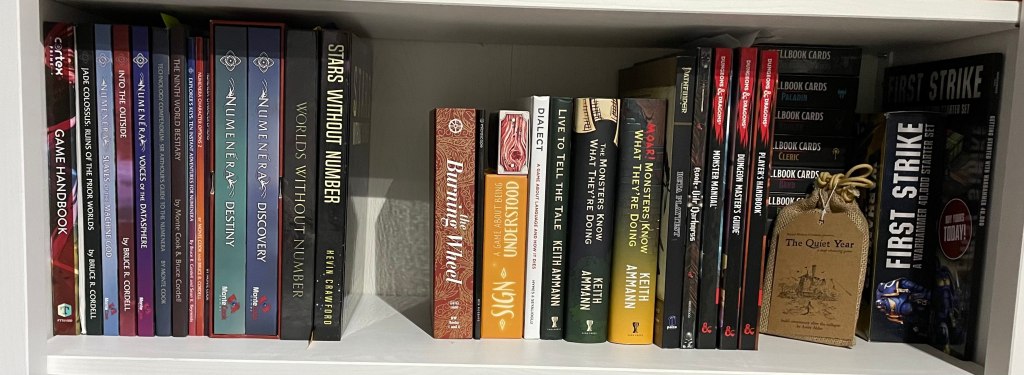
Physical game shelf as of 3/15/2022!
My physical game shelf as of 3/15/2022! Looking forward to adding to it…